Home Page

Wednesday, October 17, 2018

Filoli in Fall

Recently my aunt, husband, and I visited Filoli in Woodside on a clear, sunny afternoon to experience the estate in fall. We drove through San Francisco and headed south (rather than driving from the east via the San Mateo bridge), so got a closer look at the Crystal Springs Reservoir. We ate a quick picnic under the oaks to keep our strength up, and then started our self-guided tour.

Grand entrance begonias and wisteria with seed pods

My aunt and I have been working our way through the seasons at Filoli over the past several years (See Filoli in Winter, Spring, and Summer).

Sunken garden

Garden House
Shady terrace

Filoli still had plenty of flowers for the late-summer to early-fall transition. The borders by the sunken garden were filled with oranges and blues, the rose garden still had roses, and the begonia beds were beautiful.

Orange and blue flower beds

Swath of begonias

Rose garden

On the day we visited, preparations were underway for an evening wedding. We had the pleasure of catching views of the bride and her attendants, and the groomsmen strolling about (apparently slip on shoes and no socks is a thing). We could hear snatches of classical and dance music coming from different directions, as both musical groups warmed up.

Music room

View of the garden

Reception room

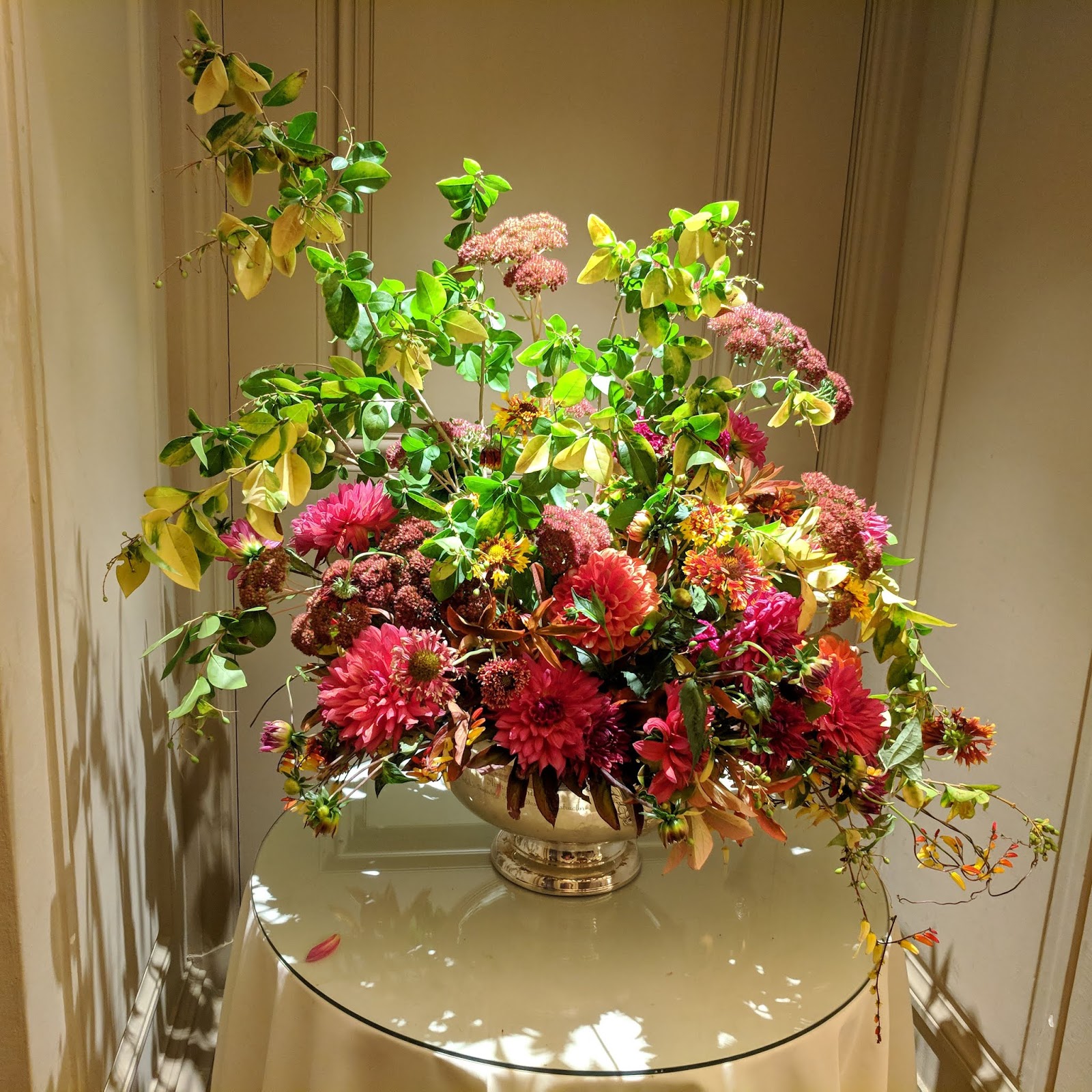
The house looked ready for crisp fall days. Rooms were set up for family activities such as cards and board games in the study; a cozy dinner in the dining room; and an impromptu sing-along in the music room. The kitchen suite, with its multiple pantries and ample storage, looked ready to prepare hearty food for the family, or delicate hors d'oeuvres for the grand ballroom. Several commanding floral arrangements caught our attention.

Cozy dining for eight

Grand ballroom
My Example

Floral arrangement for early fall

Interesting use of a flower tassel

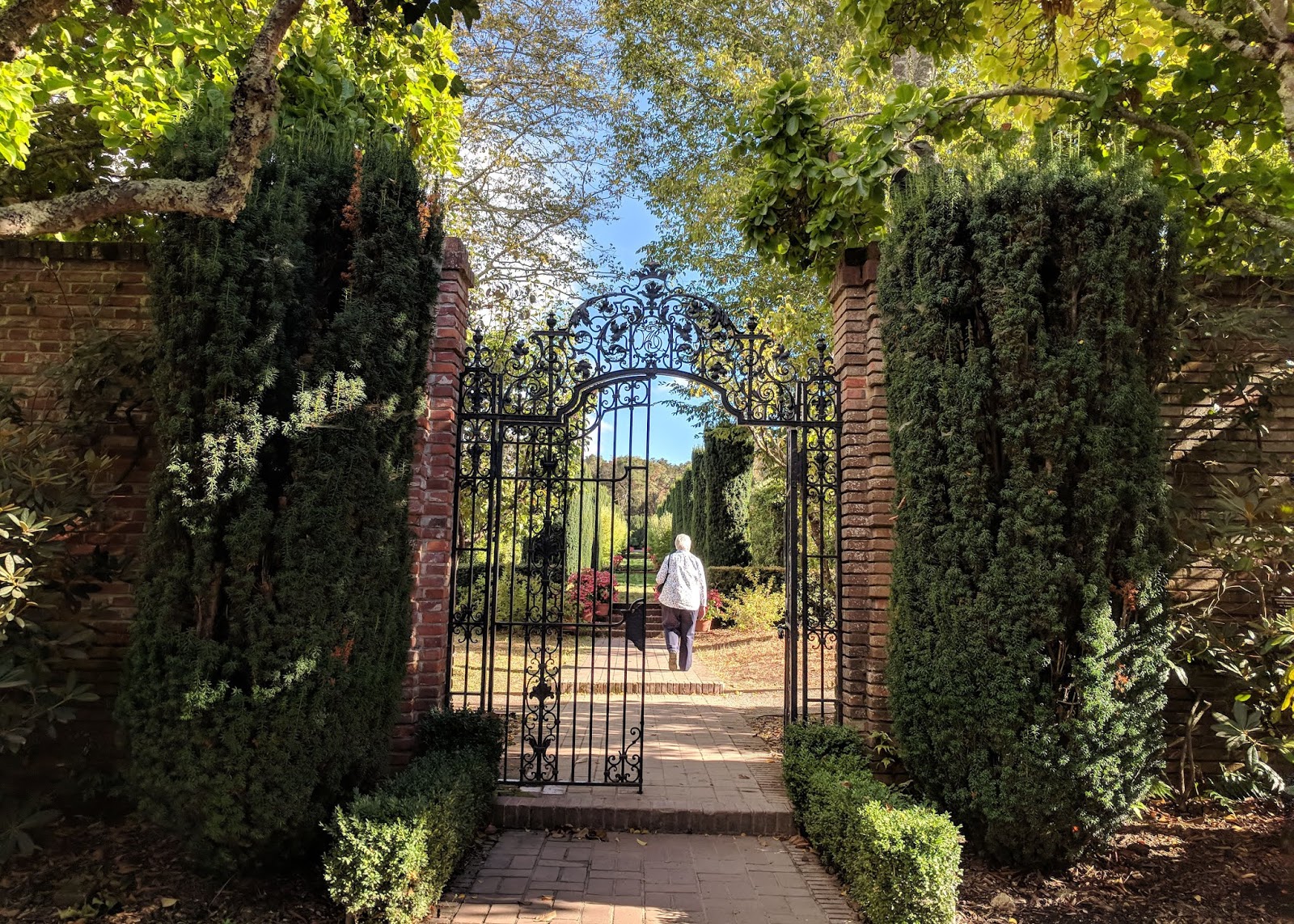
Outside the fall light filtered through the leaves, illuminated the flowers, and bathed everything in a glow. The air was warm, with an occasional cool breeze, and we could see the early signs of leaves and grasses turning to fall colors.

Exploring beyond the gate

We stopped at the gift shop on the way out to purchase some apple butter, and admire the rows of succulents in shades of blues, greens and pinks.

Appealing succulent starters

Afterward we headed for the East Bay for dinner and ice cream creations at Fentons Creamery and Restaurant, and great conversation. We've achieved our goal of visiting Filoli in all seasons, and look forward to revisiting in any season. Plus, we've discovered a fifth season at Filoli (Holidays at Filoli) and the newly opened Estate Trail.

Crystal Springs Reservoir


Wednesday, October 10, 2018

Hazel-Atlas Mine Tour

My husband and I signed up for the new extended Hazel-Atlas mine tour at Black Diamond Mines, and met our tour group at the Greathouse Portal. It was 90 degrees outside, but we felt refreshing cool air coming through the portal from deep inside the hill.

The Greathouse Portal - original entrance to the sand mine
The Greathouse Visitor Center
Warren of mine shafts

After an introduction, we hiked about 15 minutes to the Hazel Atlas Portal, and the gated entrance to the Eureka Coal Mine. We learned about coal (the pressurized remains of peat from a vast inland sea), and the coal mining that took place from 1860 -1906 (miners came from all over the world, conditions were hard, and the hours long). Mining was finally stopped because the Mount Diablo Coalfield produced the lowest grade of coal, lignite.


The Eureka Slope - entrance to the Eureka Coal Mine

Eureka Coal Mine

We suited up with our hard hats and LED flashlights and hit the mines. We saw the office, where all workers and visitors checked in for safety. Everyone had to be accounted for in case of an accident in the mine.

Suited up and ready to tour

The office
Veins of coal running through sandstone

Sand mining took place from 1920s -1940s. The sandstone produced silica that was almost 95% pure. It was used by the Hazel-Atlas Glass Company to manufacture bottles and jars in Oakland. The sand is very fine, so easy to see why it was selected for making glass.

Vein of coal running through the sandstone
A chute for loading ore cars with sand

A giant stope left from mining sand

On the tour we saw cutaways of the veins of coal running through the sandstone. We also saw an earthquake fault which was interesting (and sobering). We were grateful for all the rock bolts and special steel-frames protecting the passages. Our tour guide pointed out stopes and chutes, and a mine car filled with sand.

Back at the Visitor Center we learned more about glass production.
My Example

Ore car filled with sand

Form for an Atlas-Mason jar

Formed shot glass and jar

Collection of glass products

We finished the tour at the small gift shop, perfect for "Black Diamond" coal specimens, pencils, and black licorice "coal". We finished the day with dinner and conversation  at Casa Orinda Restaurant, an original roadhouse known for fried chicken and biscuits and many other delicious menu items.

This is a wonderful tour for anyone interested in geology, mining, or history. You can order tickets online, or buy them at the Greathouse Visitor Center (tours are small, so can sell out quickly).


Wednesday, October 3, 2018

Black Diamond Mines Regional Preserve

The hills around Black Diamond Mine Regional Preserve are hollow, with a warren of mine shafts running through them. I've been reading about its coal and sand mines for the last year, and wanted to see it for myself. My husband and I made a late summer excursion from the East Bay out to Antioch to visit this East Bay regional park.

Back Diamond Mine Regional Preserve

Monument to the Mount Diablo Coalfield near Antioch

Black Diamond Mines Regional Preserve is the site of the former Somersville mining town, which supplied glass-making sand to the Hazel-Atlas Glass Company in Oakland, as well as the townsites of nearby Nortonville, Stewartville, Judsonville, and West Hartley. From the mid-1800s to mid-1900s, this was a bustling mining area, which extracted nearly 4 million tons of coal and 1.8 million tons of sand.

View of the Somersville townsite, and the Rose Hill Cemetery on the hill

There is no trace of the former townsite, but the historic Rose Hill Cemetery remains high on the hill (you can spot it via the row of yews that seem out of place in the landscape). I confess we chose to sit in the shade, rather than trek up the hill in 90 degree heat, but maybe next time. As is characteristic of old California mining towns, the buildings were dismantled when a mine is closed, and the wood moved to the next mining site.

Ample picnic area

Shady picnic site

We allowed plenty of time for a picnic under the deep shade of the native oak trees. Mixed in with the native trees, we could see some of the exotic trees that had been planted by the miners, such as black locust, pepper, almond,  eucalyptus, and trees of heaven. The Black Diamond Mines brochure also notes that the park is the northernmost location for Coulter pine, black sage, desert olive, and dudleya. Quite a mix!

Some of these trees may have been planted by miners

View to "the Delta" in the distance

You'll find plenty of trails in the area for hiking and exploring. From one of the trails we could see a view through Markley Canyon clear to the Delta in the distance. I've been hearing about "the Delta" for years, and was glad to finally see a glimpse of it!

Mine tailings

I recommend the Black Diamond Mines Regional Preserve for anyone who loves the California landscape, with a dose of early California history thrown in. The hills are a great place to see wildlife and birds, and reportedly springtime flower displays. I also recommend taking a tour of the Hazel-Atlas Mine.