Home Page

Wednesday, July 6, 2011

Benefits of Thinning

As mentioned in a previous post, it is very difficult to thin sprouting plants that seem so healthy. Thinning refers to the agricultural practice of removing plants or parts of plants to make room for other plants. Typically, seed packets recommend planting seeds close together, then thinning after a period of time. Since not all seeds germinate or produce a healthy plant, this strategy of over-planting increases the likelihood that some plants will sprout and develop.
These radishes were planted at the same time.
Those in the top row had room to grow, those
in the bottom were crowded together.

Once established, plants need room and resources to grow. With fewer plants, each individual plant has access to the resources it needs, such as nutrients, water, and light. Roots spread out and establish a firm foundation, and air circulates around the plant preventing molds and disease. Healthy plants yield more produce.

To thin, determine which plants to eliminate. Remove weaker, underdeveloped plants, and leave the larger, hardier ones. Pull the plant out gently from moistened soil, so you don’t disturb the roots of the remaining plants, or cut the plant at the soil line, leaving the root in the ground to compost. Another option is to transplant the plants you remove. Try thinning over time, so it doesn’t feel so drastic. In my experience, the results are almost immediate – the remaining plants leap in their growth, which encourages me to thin some more.

Sunday, July 3, 2011

Vegetable Garden – Three Weeks

It has been about three weeks since I planted the first batch of veggies in the raised bed. So far, everything has grown, except for the carrots. The carrots sprouted, but disappeared; most likely eaten by some creature. The tomato plants all have yellow blossoms, and will soon require cages. The pole beans are still short enough to stand on their own, but the peas need a trellis soon for support. I’m looking for a sturdy, inexpensive solution.

Raised bed vegetable garden at three weeks

It’s also time to thin the sprouts. For some reason, this is very difficult for me to do. It seems wrong to thin plants that look so healthy. But, I’m always surprised how quickly the remaining plants respond to thinning. They seem to double and triple their size over night, as soon as there is more room. Thinning (or transplanting) really does increase yield. 

Tender lettuce, spreading out in container
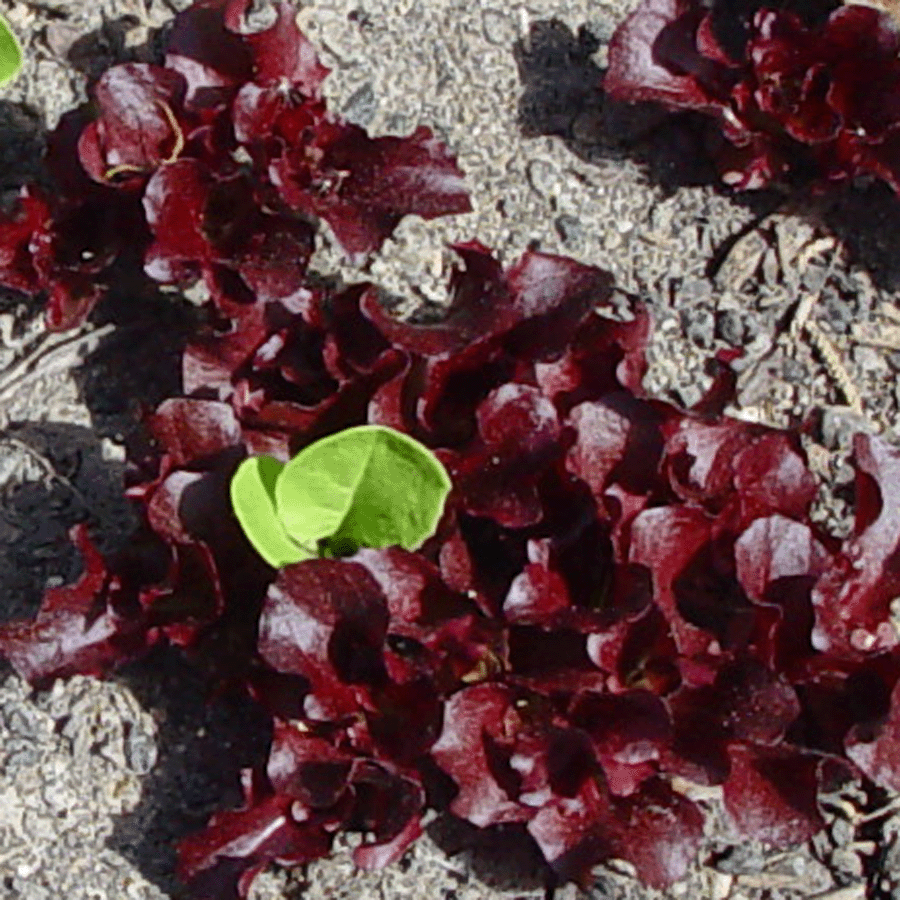
Tender lettuce sprouts, growing close together in the raised bed

I can see the difference in the lettuces I planted. On the left, the lettuce plant in the container has plenty of room, and spreads out. On the right, the lettuce plants ended up all jammed together because of our unseasonable rains. Their growth seems stunted. I plan to transplant them, to give them more room.  That should keep me busy on the Fourth of July weekend!

Friday, July 1, 2011

Summer Movies

I love summer – long days, family trips, the beach, cookouts, and summer fruit. I also like summer novels and summer blockbuster movies (typically less serious and more entertaining than usual)! This month I plan to look at movies that feature plants. Even if you don't like the movies (they are frequently sci fi or fantasty), I’m hoping you’ll enjoy seeing plants as movie stars!
First up is "This Side of Paradise," from the original Star Trek series (season 1, episode 24). The Enterprise crew lands on Omicron Ceti III to rescue anyone who has survived exposure to deadly Berthold rays. They are surprised to find the colonists alive. They soon learn that spores from a native pink flower—which gives the recipient a sense of well-being and the desire to remain on the planet—have kept them alive. The ship’s crew succumbs to the spores, throwing off their inhibitions and responsibilities. Even the logical Spock is infected; he frolics and openly admits his love for the colony’s botanist. Luckily Captain Kirk is able to figure out a solution, and rescue the colonists and his crew.

"Happiness plant" that emits mood-altering spores
(Photo from the Star Trek web site) 

The botany of the pink-flowered plant is a little mysterious, but the episode aired in 1967 during the hippie heyday. I suppose a corollary would be the cannabis plant, hallucinogenic mushrooms, or wine from fermented grapes. Here is a quick synopsis from YouTube (or you can see the full episode on the Star Trek website:  https://www.startrek.com/videos/episode-preview-this-side-of-paradise: