Home Page

Sunday, May 12, 2013

California Impressionist Paintings

We visited The Irvine Museum in Irvine, California, where we met up with some of my mom's cousins from Huntington Beach. We have not gathered for a number of years, so it was great fun to reunite and catch up, while enjoying beautiful California Impressionist art. The day we visited, we had permission to take photographs, enabling us to share and study the paintings in a unique way.

Emil Kosa, Jr. (1903 - 1968)

William Jackson (1888 - 1942)

The Irvine Museum is celebrating their 20th anniversary this year with the exhibit, "Lasting Impressions." The mission of the museum is to preserve and display California Impressionist paintings, also called California pleine-air paintings.
 
Paul Grimm (1891 - 1974)
 
Paul Grimm
These paintings were created between the early 1900s to early 1930s. The movement was influenced by the European Impressionist movement, but focused on Northern or Southern California scenes, with a regional flair. 


 Guy Rose (1867 - 1925)

What I love about the paintings is that they capture rural California from 100 years ago. They also capture the quality of light that makes both Northern and Southern California so unique; similar, I've heard, to the light in Southern France, where Impressionism thrived.
 

Wednesday, May 8, 2013

Desert Plant Wrapup – 2013

Each year, I look forward to adding new flowers and plants to my Desert Plant Wrapup “photo album” (see previous albums for 2011 and 2012). Each spring, my experience in the desert is unique. We see some blooms no matter when the visit is timed; we see other blooms depending on timing in the season, rainfall, location, and weather. This year was no different. We saw some of the faithful blooms that we always see, such as Ocotillo, Brittlebush, Palo Verde, Yerba Santos, and Bladder Pod.

We saw a few new items as well, such as Joshua Tree seeds, Lax-flower, and Mojave Mound. We also saw mistletoe in abundance everywhere we went (possibly I was predisposed to notice it, since I’m researching a series of posts on parasitic plants). It’s encouraging that even after a two-year drought, which has left many plants looking practically dead and other plants producing a minimum of blossoms, life finds a way to adapt and continue. Here are this year’s offerings.

Creosote Bush
 
Yerba Santos
 
Cat's Claw Acacia
 
Desert Trumpet (insignificant flowers)
 
Honey Mesquite
 
Lax-flower
 
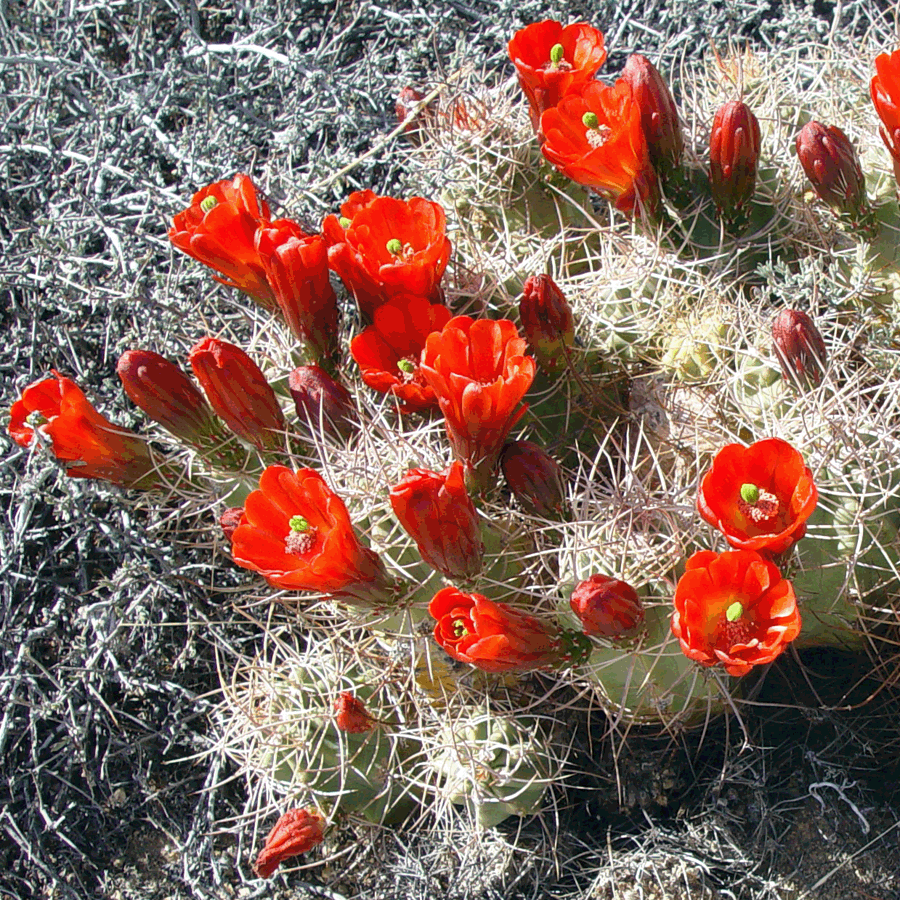
Beavertail Cactus
 
Teddybear Cholla Cactus
 
Unidentified - possible sage (resembles Chia in form)
 
Mojave Mound


Sunday, May 5, 2013

Joshua Tree National Park

My folks and I spent a day exploring Joshua Tree National Park, another favorite spot on our annual Southern California desert tour (see the report from 2012). We visited during the week, so missed the weekend crowds; but did encounter a short delay for the Pinto Basin Road Renovation project, and were not able to stop at the Cholla Cactus Garden. The weather was beautiful and warm, and a brisk breeze kept the vistas clear and the temperature comfortable.

Bajada at the Southern Entrance

On Interstate 10, we noted that the Palo Verde trees were blooming yellow (they rely on the chlorophyll in their trunks for photosynthesis), and the Ocotillo were blooming red (few had leaves on their stems, indicating the dry conditions). We entered the Park through the Southern entrance, stopping at the Bajada Nature Trail for the quarter mile loop (wheel chair accessible). We learned that a bajada is an alluvial fan or wash at the base of a mountain. Everything in this area was dry, dry, dry. Many plants and trees looked nearly dead, indicating they have fallen back to survival mode.
Very dry Ironwood tree on the Bajada Nature Trail

We stopped at the Cottonwood Visitor Center to pick up several maps. Here at the higher elevation, the plants looked much healthier. We saw lots of Mohave Yucca (Yucca schidigera), well past the blossom stage and into seed production; and identified Jojoba, Datura, Chuparosa, Creosote, and Cholla cactus. We headed toward Hidden Valley, on a tip from an article by David Danelski in the Press Enterprise, about Joshua Trees blooming like crazy this year. He reported several theories, one of which is that drought stressed trees are putting all their energy into seed production to ensure survival. We were too late to see the blooms, but could see that almost every branch of every Joshua Tree had sported them.
 
Joshua Trees of the Mohave Desert

We stopped at Jumbo Rocks and Hidden Valley to walk the desert floor and climb on the fabulous rock formations. Many rock climbers train and climb in this area. We identified scrubby Juniper trees, Mojave Mound cactus, Barrel Cactus, Bladder Pod, Jojoba, Desert Trumpet, Mormon Tea (with multiple flowers at the joints), as well as Joshua Trees and Yucca. We saw lots of mistletoe, lizards, and even evidence of tent caterpillars.

Rock climbing at Jumbo Rocks
My folks and I ended our day at the Rib Company in Twentynine Palms, with tasty half racks and all the fixings.

Mojave Mound cactus
 
Cactus
 
Lichen colonies
 
Joshua Tree seed pods