Home Page

Wednesday, March 16, 2022

Studio Updates: New Fiber

 In this video I’m sharing more updates to my studio, with the spotlight on new fabric and fibers. In another video we reviewed new products and equipment (see Studio Updates: New Gear). It’s always fun to try new ideas and new techniques. I may not use everything this year, but I like to be “tooled up” and ready.


Mercerized Cotton Fabric

One acquisition is two yards of bleached, 100% mercerized cotton print cloth (CPC) from Dharma Trading Company. The fabric is used by quilters, sewers, beginning dyers, and fabric painters. Mercerization is a process applied to plant fibers to increase luster. It is applied to fabric after weaving, or to yarns and threads after spinning. Mercerized fibers absorb more water, and therefore more dye, making the color of the dyed cloth brighter and deeper (sometimes by as much as 25%). The process gives cloth better color resistance over multiple washings, increased strength, smoothness, resistance to mildew, and reduced lint.
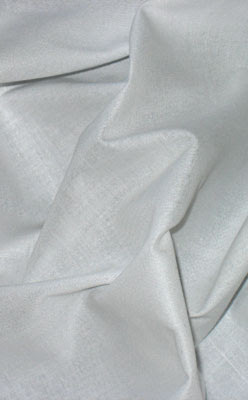

Mercerized Cotton Fabric (note the luster)
Photo Credit: Dharma Trading Company


Linen Fabric (Plant-based)

Another acquisition is one yard of bleached, 100% linen fabric, also from Dharma Trading. Linen is durable, breathes, and is good for dyeing. It maintains density during use, and does not lose color.


Linen Fabric (medium weight)
Photo Credit: Dharma Trading Company


Linen Party Napkins (Plant-based)

These small 100% linen napkins are carried by Amazon. They are described as being soft, with a heavyweight feel, 6" x 6", with elegant ladder hem-stitching and mitered corners. I’ve never dyed with linen, so am interested to see how well it absorbs color.


Linen Party Napkins
Photo Credit: Amazon


Silk Satin Scarves (Protein-based)

These silk satin scarves are also a departure since I’ve never dyed protein-based fiber. They are 8" x 54", though many other shapes and sizes are available from Dharma Trading Company. The hems are hand rolled with 100% silk thread, and the scarves are ready to dye and paint. I plan to use the silk for eco-dying – the direct transfer of color from plant to fiber, with the right mordant.


Silk Satin Scarves with Rolled Hems
Photo Credit: Dharma Trading Company


Peruvian Highland Wool Yarn (Protein-based)

This Peruvian Highland 100% wool yarn is also a departure into protein-based fiber. The sturdy, all-purpose yarn is distributed by Amazon. I’m not a knitter, but the description says the yarn is used for cable stitch patterns, intricate winter sweaters, textured stitches, and everyday accessories. It also felts beautifully. I purposefully purchased this lovely Mink Heather color, to try overdyeing. Overdyeing is the process of dyeing previously dyed fiber, with the intent to further change the color. I have 100 yards.


Peruvian Highland Wool Yarn
Photo Credit: Amazon


Cotton Dish Towels

These cotton dish towels are an old favorite and always in my arsenal of fabric. We’ve been dyeing them since the beginning, and they remain a standard.


Cotton Dish Towels
Photo Credit: Target (Made by Design)


Leftovers from Last Year

We also have some leftovers from last year, including large and small cotton handkerchiefs, and cotton dinner napkins. Some have never been dyed. Others have been dyed, and I plan to overdye them.


Recycle Dyeing

Finally, I’ve been combing thrift shops and my own wardrobe for items to dye. Old T-shirts perk up nicely in the dye bath, and fabric from various sources may wind up in a quilting project. Very sustainable!


Reuse and repurpose old fabric


Well, that is it for now. As you can see, I have lots of plans, but may run out of time. Whatever I decide to do, I’m tooled up with various fabric and fiber types and ready to dye!


Wednesday, March 9, 2022

Rainy Winter Night

Here in Northern California (and the Southwestern United States in general) we're very attuned to snowpack in the mountains, water storage levels, and water usage. We're frequently heading into a drought, in a drought, or just coming out of one. Our climate here in the San Francisco Bay Area is "summer dry", meaning that we get most of our rain in the winter months. Many of us try to conserve water using various strategies both inside and outside the house.


Winter rain is cause for celebration!

This year we received a lot of rain in November and December, thanks to several atmospheric rivers that traveled through our area. And then it stopped, except for a few brief evening showers in January and February. The clay soil hangs on to water at the molecular level for the summer months ahead, but we always hope for more. Finally, it rained last night!

Wednesday, March 2, 2022

Studio Updates: New Gear

In this video I’m sharing some updates to my studio, with the spotlight on new products and equipment. In another video we’ll showcase fabrics. It’s always fun to try different ideas and methods. I may not use everything this year, but I like to be “tooled up” and ready.


Digital Scale

One new acquisition is a digital kitchen scale, used to weigh fabric and material for dye projects. This replaces my trusty kitchen scale that is limited to one pound. This affordable Beurer scale weighs up to 33 pounds (15 kilograms), and informs you if an item is “over limit”. You can configure different units, including pounds and ounces, ounces, grams, and kilograms. And you can retain a measurement, which is ideal when trying to weigh materials and record the results at the same time.


Digital kitchen scale for weighing fabric and dye material


Convection Cooktop

Another acquisition is an electric convection burner. I resisted going this route because convection cooktops require flat-bottomed, magnetic pans, which are more expensive and harder to find at thrift stores. But I was eager to move away from propane canisters, which require special disposal. This affordable Ovente Induction Cooktop offers a range of preset temperature levels, from 140 to 465 degrees Fahrenheit. Five timer levels are preset from 1 minute to 3 hours. Safety features shut down the burner when not in use. My camp stove worked well, but it was difficult to regulate temperature (it was either on or off). Luckily one of my thrifted stainless-steel pans works with the new cooktop.


Convection burner


Low-suds Detergent

I ran out of Synthrapol scouring soap at the end of last season, so this year I’m trying a low suds Professional Textile Detergent distributed by Dharma Trading Company. Here in the West, we must conserve water, so I’m hoping a low-suds detergent will reduce the quantity of water needed for rinsing.


Jars, Cans and Containers

I’m always on the lookout for good jars, cans, and containers. Last year I purchased a 3-liter canning jar at a thrift store, which works great for solar dyeing. Jars are also handy for storing used dye, collecting plant material, and mixing additives. Cans are also useful for mixing and extracting dye. Meat and vegetable trays can be used to collect and dry plant material. They are often high quality and in a variety of sizes.


Cans, jars, and containers are great for storing, drying and preparing dye material


Ferrous Sulfate

Last year I added ferrous sulfate powder to a red camelia dye bath. Iron darkens or “saddens” the dye bath, producing darker colors. This year I’d like to experiment more with using iron in the dye bath as a modifier to produce additional colors. You can make your own iron mordant solution by soaking iron in vinegar water and use it as an alternative to ferrous sulfate.


Make your own iron solution


Exhaust Dyeing

This year I also plan to experiment with exhaust dyeing, which means reusing dyes. Over the last several years I’ve collected quite a few left-over dyes. They have been used once, which is the first exhaust. Each use of a dye is an exhaust. With each exhaust, the color becomes lighter and lighter. Modifiers, such as washing soda and iron, change the pH of the dye bath and further modify the dye color. I’m curious to see the range of colors that can be produced from a single dye bath.


Each reuse of a dye is an exhaust


Solar and Eco-Dyeing

This year we’ll try more solar dyeing, which uses the sun or time to dye. And we may try "eco-dyeing", which is the direct transfer of color from plants. I’ve seen some interesting projects online.

Well, that’s it for now. As you can see, I have lots of plans, but may run out of time. Whatever I decide to do, I’m tooled up and ready to dye!