Home Page

Wednesday, June 29, 2016

What's Blooming in June?


With the kick off of summer, comes a whole new palette of flowering trees, shrubs, and plants here in the San Francisco Bay Area. You would think by June that the blooms would be subsiding, but not so!
Rambling Roses

I’ve started to see roses (Rosaceae spp.) everywhere – from the hot inland areas of San Ramon, Dublin and Pleasanton, to the sheltered, sunny gardens of the East Bay. I don’t grow roses, but love to see their vibrant colors, and inhale their sweet fragrance. I especially like the rambling roses that are used like street trees out in Dublin.

Bougainvillea

The Bougainvillea has asserted itself with its hot pink blooms – a perfect plant for a hot, sunny location in the garden. The California native Flannel Bush (Fremontodendron hybrids) bloomed earlier in the month. Daylilies (Hemerocallis), Society Garlic (Tulbagbia spp.), and Agapanthus have started their “forever summer” cycle of blooms. No wonder we love them as staples in the garden!

Flannel Bush

Agapanthus (in white)

Fortnight Lily

Daylily


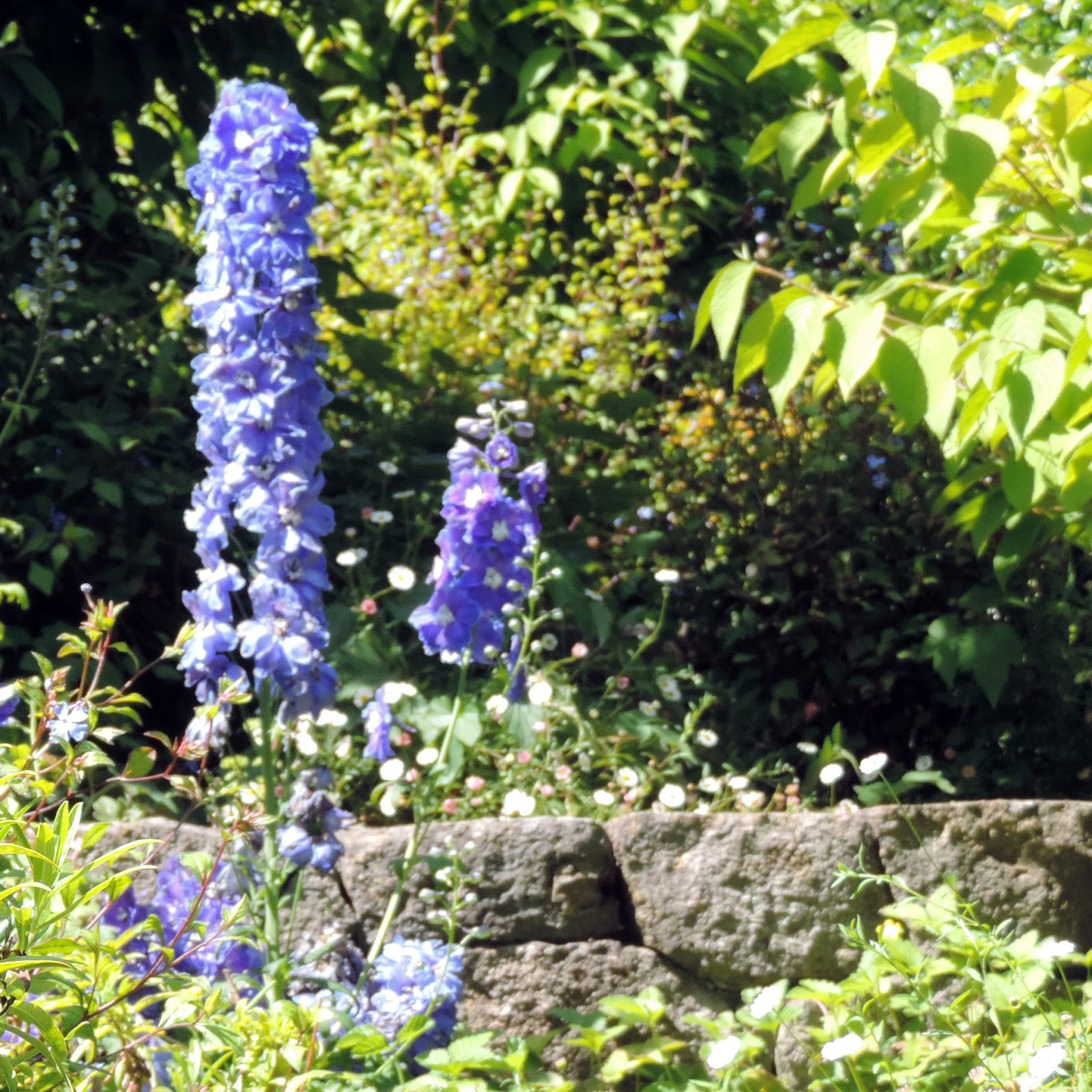
Fortnight lily (Dietes spp.), Delphinium, Four O’clock Flowers (Mirabilis spp.), Fleabane (Erigeron spp.), and many others are also blooming. They are all at home in our Mediterranean climate.

Four O'clock Flowers (I think)

Delphinium

Fleabane

Silk Tree


Flowering street trees, like Crape Myrtle (Lagerstroemia indica hybrids), Silk Tree (Albizia julibrissin), and Chitalpa (a cross between Desert Willow and Southern Catalpa) have been blooming all month. This seems earlier than usual; my recollection is that these trees typically bloom in late summer. They are a pleasure to see, as street trees or in gardens, whenever the conditions are right for them to bloom.


Crape Myrtle


Chitalpa

Wednesday, June 22, 2016

Summer Fun!


Summer – long, warm days, summer fruit, travel, a good book, walks on the beach. One of the great betrayals of adulthood is no summer vacation! For most of us, life continues, regardless of the season. But I remember as a child the pure pleasure of anticipating three months of summer vacation stretching before us, with all its potential.

Outdoor office

Swimming in San  Ramon

Outdoor cooking

Garden harvest


I liked school well enough, but relished the change of pace of summer vacation. I looked forward to hours of reading, exploring the woods and tide flats, and playing baseball and badminton with the neighborhood kids (in Southeast Alaska, we could play late into the evening, in full daylight). I also loved our family camping trips into the interior of Alaska and Canada; the cross country road trips to Minnesota and Wisconsin; and the extended stays in hot and sunny Southern California with my grandparents.

Preserving - blueberry jam

Preserving - grated zucchini

Exploring uptown Oakland

Exploring the Northern Coast


Now, as an adult, I still look forward to the days of summer, even though work and responsibilities continue. Here in the San Francisco Bay Area, we take our activities outside. We live and cook on the patio, work in the garden, make jam with summer fruit, spend the afternoon reading or swimming, make local excursions or take long weekends, and enjoy time with family and friends. Possibly the time is even sweeter, knowing it is a rare commodity.

Wednesday, June 15, 2016

Grow Your Own Plants


Grow Your Own Plants: from Seeds, Cuttings, Division, Layering, and Grafting is written by Jack Kramer, and illustrated by Michael Valdez. It was published by Charles Scribners’s Sons (New York, 1973). Jack Kramer is an American garden and plant expert who has written over a 100 books, and wrote a syndicated column for the Los Angeles Times for eight years. His books and articles cover a wide range of gardening and landscaping subjects. Other titles include Easy Care Guide to Houseplants, Cacti and Other Succulents, and The Complete Book of Patio Gardening.


The first chapter introduces the domain of sexual and asexual plant propagation, with a summary of key methods. Chapters two through four provide information about sowing seeds indoors and outdoors, and how to create the right environment of heat and light to start seeds. Chapters five and six are devoted to asexual propagation – different types of cuttings, layering, grafting, and others (division, runners, bulbs, and so forth). Chapter seven provides lists of trees and shrubs, perennials, annuals, and bulbs that are ideal candidates for asexual propagation. Chapters eight and nine cover house plant, vegetable, and herb propagation. Chapter ten describes hybridization, and gives a high-level summary of genes and genetics. The back matter includes a glossary, bibliography, and source of supplies (most of which are still current)!


I received my copy of Grow Your Own Plants in a box of gardening books from friend and fellow gardener, Charles (Chuck) Konigsberg (see Sunset Magazine Contributions to Western Gardening). It grabbed my attention, since one of my goals this year is to learn about plant propagation. I have been referring to the book to propagate plants, especially from cuttings. Even though the book is over 40 years old, it still stands up. The book is current, easy to understand, and full of practical information. The book reminds me of the “back to the land” movement of the 1970’s, and I love the line drawings by Michael Valdez. I recommend this book for your collection if you are interested in plant propagation.