Home Page

Showing posts with label fruit. Show all posts

Wednesday, April 6, 2022

Dye Project: Solar Dyeing with Avocado

This year we're kicking off the dye season with more solar dyeing, this time with avocado pits and skin (kitchen scraps)! This ties in with our "homesteading in the city" theme, where we try to be resourceful, use what we have, and repurpose items where we can. We tried our first solar dyeing project last year (see Solar Dyeing with Calendula). We're finally ready to try more solar dyeing!


In this tutorial we are solar dyeing cotton fabric with avocado pits and skin. My research shows that the fruit yields lovely shades of pink or coral dye. Some dyers report that the color is slightly different when you dye with pits only or with the skin only. For this project, I’m mixing the two. Many dyers recommend the Hass avocado for good color (Persea americana ‘Hass’). ‘Hass’ is a hybrid tree, that was developed by a Southern California mail carrier and amateur horticulturist, Rudolph Hass.
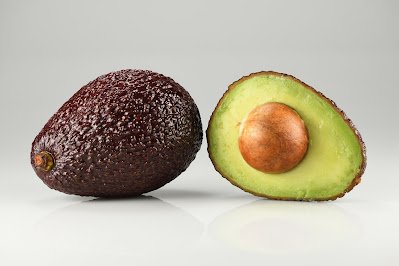

Hass Avocado (Persea americana ‘Hass’)
Photo Credit: Ivar Leidus

I followed the process documented by Caitlin French in Kissed by the Sun: The Art of Solar Dyeing,  and information found in several other sources. I used three cotton dish towels. The Weight of Fabric was 7.75 ounces (231 grams). The fabric was scoured and mordanted, using a gallnut mordant. Two pieces were also treated in a bath of 15% WOF alum and 2% soda ash as a brightener. The other was not. 

Frozen avocado pits and skin, collected over time.

I collected about 1.6 pounds of avocado pits and skin (726 grams), so, the WOF% is about 314%. I froze the avocado kitchen scraps until I was ready to dye. Ideally, clean the flesh from the pits and skin before freezing. I hadn’t noticed how much pink pigment there is in avocado skin and pits until this project.


Surprising pink pigment


Supplies (the yellowish tint you see in the fabric is from the gallnut mordant)


Supplies for dyeing include:

  • Large jar (with room for some movement)
  • A gallon of water (+ more as needed)
  • Prepared cotton fabric (scoured, gallnut mordant, and alum brightener)
  • Alum (2-3 teaspoons per 100 grams of fabric)

NOTE: For safety, use a face mask and rubber gloves.


Solar Dyeing

First, presoak the prepared fabric to ensure the mordants and natural dyes distribute more evenly, and then squeeze out excess water. Pour warm water into the jar, until it is about a third full. Stir in the alum. I used 6 teaspoons for 231 grams of fabric. Let the water cool and the alum dissolve thoroughly. 


Layer fabric and avocado scraps, and fill with alum water

Add a layer of avocado scraps to the alum treated water. Then add the first piece of fabric.  Add more avocado. Add the second piece of fabric, and repeat. Top with the rest of the avocado. With the stir stick, evenly distribute avocado scraps around the sides of the jar. Add water to cover the fabric and avocado. Let the water settle, and then top it off. Close the lid.


After three weeks (the fabric looks pink)

Leave the jar in a sunny spot, inside or out. You start to see the color appear after several hours. Check the fabric color daily, and agitate the jar slightly to distribute the dye. I soaked the fabric for three weeks. Once the fabric is the desired color, remove it from the jar and squeeze out excess liquid.


Rinse until the water runs clear


Air dry fabric

Rinse the fabric in cool water until the water runs clear. Run the fabric through the washing machines' rinse and spin cycles, using cold water. Let the fabric air dry. Two weeks later, wash the fabric in a pH neutral soap, like Synthrapol or Professional Textile Detergent, and hang to dry.

An interesting shade of butterscotch

Surprisingly, the resulting color looks more like butterscotch than pink or coral. Possibly the fabric was packed too tightly or remained too long in the dye? The unexpected outcomes are part of the adventure and fun of home dyeing. Note that the fabric piece that did not receive the extra alum brightening bath, ended up the same color as the two pieces that did.


Learn More:


Wednesday, May 5, 2021

Plant Aquarium: Toyon

The toyon hedge in our lower yard shields us from the sights and sounds of a busy street during rush hour, and is typically alive with bird sounds. It's spring and the blossoms are just getting started. Later the bushes will be filled with white flowers, followed by bright red berries.


H. arbutifolia with the start of new blossoms

Toyon (Heteromeles arbutifolia) is a common perennial shrub native to southwest Oregon, California, and Baja. It can be found in coastal sage scrub plant communities, the chaparral, and mixed oak woodlands. It is in the Rosaceae family, and is the only species in the Heteromeles genus.


Cluster of white toyon flowers in spring

The shrubs grow to 6-16 feet tall (2-5 meters), and can live from 100-200 years. The leaves are evergreen, alternate, and sharply toothed with short petioles. The flowers are small, white, and arranged in terminal clusters. The berries are bright red and festive during the fall and winter holidays.


Dense foliage and red toyon berries in fall

Toyon survives on very little water, and is less of a fire hazard than some chaparral plants. They are visited by butterflies, and the fruit is eaten by birds (mockingbirds, robins, cedar waxwings, and hermit thrushes) and even mammals. Native Americans used the leaves, bark, and berries for medicinal purposes, including Alzheimer's. We are visited by many birds in our yard, and the dense hedge provides them sanctuary.


Learn more:


Wednesday, October 24, 2018

Fall Details at Filoli

Apples, apples, apples! On the day we visited, the Gentleman's Orchard at Filoli was filled with apples on the trees and on the ground. The leaves were changing to fall colors and the beautiful afternoon light bathed them in a warm glow.

The back garden in fall

Apple tree in fall sunlight

According to signage on the grounds, Mr. Bourn considered himself a gentleman farmer, and planted 1000 fruit trees in 1918. Of the 1000 original trees, 115 survive. Over the last 20 years Filoli volunteers have planted hundreds of replacement heritage trees. The orchard contains over 400 different varieties of apples, pears, and grapes. The fruit is donated to food banks and made into butters for sale at the Clock Tower Shop.

Orchard hauling wagon

Red round harrow

A friendly scarecrow did its best to keep away scavengers, but I noticed several kids in the orchard enjoying a fallen apple and tossing the core on the ground. Several pieces of antique farm equipment were on display in the orchard, including an orchard supply wagon (with no brakes), and a rotary harrow (the round shape makes it easier to move around trees in an orchard). Recall we encountered different shaped harrows in Dairy Farming History at Heritage Park.


Fall colors in the back garden

The heirloom apples are beautiful! They are fragrant and come in a variety of colors, sizes, and shapes. The cabbage and kale patch was also beautiful and a reminder of the bounty of fall harvest.

My Example

Many apple varieties (and a few pears)


Friendly scarecrow

Red delicious apples

Jonathan apples

Cabbage and kale patch

More apple varieties

We purchased some apple butter at the Clock Tower Shop on the way out of the estate. It's delicious, and a wonderful reminder of our fall trip to Filoli.


Wednesday, July 25, 2018

Fiendishly Fertile

Most of the time when you cut into a grapefruit, you find a few seeds that you can easily flick away with the tip of your knife. I was surprised to cut into this grapefruit and see all of these seeds!

Seeds galore

Eager to get on with my breakfast, I didn't stop to count the seeds. But later wondered - how many seeds does a grapefruit produce? Was this an anomaly, or routine for some grapefruit varieties?

Turns out, some grapefruit (Citrus x. paradisi) can be seedless or nearly seedless, others may have up to 90 seeds! Learn more from Fruits of Warm Climates, by Julia F. Morton, the Rutaceae section: https://www.hort.purdue.edu/newcrop/morton/grapefruit.html. Although this grapefruit appears fiendishly fertile, it may only be about average!


Wednesday, August 3, 2016

Birds and Bees – Fruit Development


There is nothing better than summer fruit – nuts, peaches, nectarines, apricots, cantaloupe, watermelon, honeydew, berries, and more. They provide delicious nutrition and refreshment in the heat of summer, whether you eat them as is, whirled into a smoothie, or baked in a pie or crumble. Made into jam or jelly, or dried and preserved, you can enjoy the taste of summer in the cold, dark days of winter.

Fruit is the term used for a ripened ovary, typically from fertilized flowers (called true fruits). The term is also used for fruits that develop from other specialized cells in the ovule, other than the fertilized egg (called accessory fruits). Different fruit types develop related to the nature of the flower blossom (for a terminology refresher see: Birds and Bees – Flower Parts).

Fruit types, and their development.
Copyright @2008 Pearson Education, Inc. publishing as Pearson Benjamin Cummings

  • Simple fruit (first column) – develops from a single carpel or fused carpel of a single ovary. Examples: nuts, beans, peas, tomato, orange, grape, melon, peach.
  • Aggregate fruit (second column) – develops from more than one carpel, but all in the same flower. The mature carpels fuse together to form a single fruit. Examples: blackberries and raspberries.
  • Multiple fruit (third column) – develops from an inflorescence or a cluster of flowers, which fuse together to form a single fruit. Examples: pineapple.
  • Accessory fruit (fourth column) – does not develop from the ovary, but from another flower part such as the receptacle or hypanthium. Examples: strawberry, apples, pears.

The purpose of most fruit is to produce a seed. For some species the ovary develops into the fruit wall (the pericarp), and become soft and fleshy as the seed nears maturity (stone fruits, such as peaches). For other species, the pericarp becomes hard and dry (pea pods). Dry fruits may scatter from pods (poppy), or become very hard and retain their pericarps until they rot (acorns, almonds). When the fruit matures, it may be eaten, or remain in seed form until ready to germinate.

Learn More:

  • Botany for Gardeners, by Brian Capon (Timber Press 2005). See Part V Reproduction, Chapter 9, “From Flowers to Fruits: Fruit Types”.
  • Pollination and Fertilization, derived from Pollination and Fertilization, by Robert Bear and David Rintoul, for Open Stax, Rice University (Creative Commons).

Wednesday, December 2, 2015

Holiday Cooking – Hops

I love this time of year, with all the Christmas traditions, decorations, and music. I especially like attending candlelight services, singing Christmas carols, and finding special gifts for people I love. Also high on the list is baking and cooking favorite recipes, and trying new ones. For the past several years I’ve reported on spices, herbs, and ingredients used in these holiday recipes, using The Lore of Spices, by Jan-Öjvind Swahn. This year, the series title should be "Holiday Drinking," since all of the plants are used to flavor beverages. This year I’m starting with a flavoring used in beer – hops!


Botanical illustration of Humulus lupulus from Koehler's Medicinal Plants.
Published before 1923 and public domain in the United States.

Humulus lupulus is in the Cannabaceae family, the hemp plants. Hops originated in the temperate regions of Eurasia and North America, and were first cultivated in Eastern Europe, and then across Europe. Beer making was invented in prehistoric times, and beer spicing dates back to early Egyptian and Roman cultures. Spices were added to flavor the beer, and enhance the feeling of drunkenness. In Europe, during the Middle Ages, hops were added to beer to enhance foaming, add a bitter taste, and preserve it. Hops were used medicinally by the Greeks and Romans for its mild narcotic effect, and by monks to flavor beers brewed in monasteries. Today hops are an important ingredient in beer (“Imperial” in the label indicates a hoppy beer).

Hops grow 19-22 feet (6-7 meters) tall. They grow clockwise around a pole or tree, clinging with small barbs. Hops are dioecious, with male and female flowers growing on separate plants. The male flowers are small, loose, axillary panicles, with five sepals, and five stamens; female flowers are short, solitary, bracted spikes, each with two flowers, which are cone-like at maturity. The fruit is an achene with one carpel, a single seed, and indehiscent. The fruit excretes a substance called lupulin, which contains the bitter flavor. Foliage is yellow-green; leaves are 3-5 lobed, palmate, as broad as long, coarsely toothed, and opposite. Stem is coarse. Reproduction is by seed or rhizomes. Hops favor loose, limy soil and moist environments. Hop cones are harvested in the fall, dried, and sent to the brewery.

Wednesday, October 21, 2015

Dry Farming

This year we’re following the drought in California. The snow pack is dwindling, the aquifers are being drained, and more and more people are competing for limited water. In response, we’re looking for ways to change how we garden. It won’t solve the greater problem of collecting and distributing water for multiple commercial, aesthetic, and personal interests, but it may help. Scientist recently offered hope that El Niño could bring rain this winter, but we still need sustainable solutions that extend beyond the next season. Until the rains and innovations come, I’m on the hunt for interesting ideas.

This story about dry farming in San Luis Obispo (SLO) grabbed my attention this summer; I heard it on The California Report: In Face of Drought, San Luis Obispo Farmer Advocates Dry Farming (by Lisa Morehouse for California Foodways, June 28, 2015). Dry farming relies only on rainwater. This is the old fashioned way of farming, using smarts, luck, and prayer. No irrigation.

Dry-farmed walnut trees in SLO (photo by Cynthia Wood/KQED)
 
Jutta Thoerner and Cynthia Douglas grow walnuts on Manzanita Manor Organics in SLO, using only rainwater. They use a variety of techniques for preparing the soil, grafting and planting trees, and retaining water in the soil; and maintain that the nuts are smaller but more flavorful. Mike Cirone dry farms fruit in SLO, and has a cult following of buyers for his small, sweet apricots and apples. Morehouse reports that a lot of crops are dry farmed across the state – wheat and grapes; tomatoes (Central Coast); potatoes (Marin); and squash (Humboldt). Dry farming works especially well in coastal and foggy areas, with good soil. Very inspiring – I think I’ll order some of those walnuts!

You can also read the article online: http://ww2.kqed.org/news/2015/06/28/in-face-of-drought-san-luis-obispo-farmer-advocates-dry-farming 

Wednesday, December 17, 2014

Holiday Cooking – Bay Leaves

What could be homier than the fragrance of bay leaves wafting from the kitchen at Christmas? Bay leaves enhance broth and gravy, lace roast turkey and chicken, and add a rich flavor to stove top bread stuffing. A few bay leaves added to stew or soup provides a warm, pungent flavor.

Laurus nobilis (bay leaves) are used in marinades; and in bouquet garni (with parsley and thyme) to flavor bouillons, sauces and soups. Laurel belongs to the plant family Lauraceae, which includes the spices cinnamon and cassia. A native version, Umbellularia californica, grows in California and Oregon, and can also be used for cooking.

Botanical illustration of Laurus nobilis from Koehler's Medicinal Plants.
Published before 1923 and public domain in the United States.

According to J.O. Swahn, in The Lore of Spices, laurel originated in the Mediterranean (Greece and Syria). Its berries and leaves were included in the Roman cookbook Apicius in the first century A.D. The laurel was exported to northern Europe in the Middle Ages and used for healing, and by 1652 was included as a cooking spice in François-Pierre de la Varenne's cookbook, Le Cuisinier Français. He may have learned about it in Italy at the Medici court.

Laurel is eternally green, starts as a pyramidal bush, and grows into a tree up to 40 feet tall. Leaves are dark-green and glossy, with lighter undersides, lanceolate to elliptic to four inches long, aromatic, and fairly hard. The leaves are used in cooking, and yield an essential oil used in perfume and medicine. Bark is soft, olive green or reddish. Flowers are small, yellow or greenish-white. Both male and female flowers grow from the tree's leaf folds. Fruit is a shiny, drupe about the size of a small grape or cherry, and may be green, dark purple, or black.

Wednesday, December 10, 2014

Holiday Cooking – Red Peppers


Another tasty flavor for Christmas is red pepper, which can take the form of bell peppers, spicy chili peppers, and a host of varieties in between. Tasty holiday recipes include red pepper jelly, sweet chili sauce on cream cheese and crackers, chili con carne, and spicy salsa for chips. Whether you desire sweet or heat, the range of flavors spices up any holiday spread.

Capsicum annuum (bell pepper, chili pepper) is in the Solanaceae, or nightshade, family. Capsaicin is the active component that causes the burning sensation for humans and other mammals. Birds are not affected, so are effective sowers of the seeds. Heat is measured in Scoville heat units (SHU), ranging from 0 for bell peppers to over 2,000,000 for the Caroline Reaper cultivar.


Botanical illustration of Capsicum annuum from Koehler's Medicinal Plants.
Published before 1923 and public domain in the United States.


Red peppers originated in Central and South America, and the Caribbean, and records show they have been cultivated since 3,000 B.C. According to J.O. Swahn in The Lore of Spices, Christopher Columbus’s physician brought peppers back to Spain, where they became popular ornamental, and then culinary, plants. Peppers spread throughout the Mediterranean and in countries further east, such as India, Southeast Asia, and China. They are now an important ingredient for spicy, regional cuisines all over the world.

Red peppers grow to 30 inches high; and are perennial, but often treated as annuals. They may be glabrous or pubescent. Leaves are lanceolate, one – five inches long. Flowers are solitary, rarely two at a node; calyx is rotate, five-toothed; corolla is white, five-lobed to ½ inch across. The fruit varies in shape, size, color, and pungency. Five main groups of peppers are included in C. annuum: (1) Cerasiforme (cherry peppers), (2) Conoides (cone peppers), (3) Fasciculatum (red cone peppers), (4) Grossum (bell or sweet peppers), and (5) Longum (chili or cayenne peppers).

Wednesday, December 19, 2012

Holiday Cooking – Allspice

This month I have explored several favorite spices that flavor my holiday baking, using J.O. Swahn’s The Lore of Spices for information. Today I’m learning about allspice, which I use in several cookie recipes. The spice is also used in many commercial products, such as condiments, pickles, sausage, and spice mixtures (including Jamaican jerk spice).

Pimenta dioica (formerly P. officinalis) is in the Myrtaceae (or myrtle) family and native to tropical West Indies and Central America. Today it is cultivated in Jamaica, Cuba, Trinidad, Mexico, and Honduras. According to Swahn, allspice was largely ignored by early European explorers in the New World. In the 1570s the scholar Francisco Hernandez observed that a spice about the size of peppercorns was an ingredient in the spiced chocolate drink made by the Aztecs. In 1600 the spice was exported to Europe and became quite popular. In the late 1600s the English naturalist John Ray called the spice “sweet-scented Jamaica pepper” or “allspice” in his Historia Plantarum.

Botanical illustration of Pimenta dioica from Koehler's Medicinal Plants.
(Published before 1923 and public domain in the United States)


Allspice is a tree that grows to 40 feet. Leaves are oblong-lanceolate, to 6 inches long, with prominent veins. Flowers are white, ¼ inch across, with four-lobed calyx. Fruit is round, ¼ inch across, and dark brown, containing two seeds. Both leaves and fruit contain the aromatic oil – eugenol, also found in cloves. The fruit is harvested before it is ripe, typically in July or August while still green, and then dried in ovens. The dried berries are used whole or ground.

Wednesday, December 12, 2012

Holiday Cooking – Cloves

This month I’m back to learning more about the plants that flavor my holiday baking. Today it is cloves, which I use to flavor pumpkin and vegetable breads, pumpkin pie, and cookies. I also use whole cloves, along with cinnamon sticks, to flavor hot apple cider. For years my maternal grandmother, Grandma Char, hung a string of cloved oranges over the sink in her kitchen. Whole cloves were pushed into a fresh orange like little tacks, and seemed to preserve the orange as it dried and hardened. The aromatic mixture of clove and orange oil was released into her tiny kitchen as it heated up from the hot stove or steaming kettle.

Syzygium aromaticum is in the Myrtaceae (or Myrtle) family, and originated in the Molucca Islands (or Spice Islands) in the Indonesian archipelago north of Australia. Cloves have been used to sweeten breath in China; increase male potency, warm cold feet, and cure gout in Europe; keep evil spirits out of body openings through nose and lip clove piercings in the East Indies; used as a local anesthetic for dentistry in Germany; and flavored food, cigarettes, and perfume worldwide.
Cloves have also caused bloodshed as the Portuguese, Dutch, and English sought to control production and distribution in turn. Clove production in the Molucca Islands was tightly controlled from the 1500s through 1700s to the point that wild or privately grown clove trees were destroyed, smuggling cloves was punishable by death, and an estimated 60,000 islanders were massacred. In 1753, a Frenchman named Pierre Poivre (or Peter Piper, of “picked a peck of pickled peppers” fame), smuggled clove plants out of the Molucca Islands and grew them successfully on the Isle de France for presentation to King Louis XVI. Today cloves are grown in the warm climates of Malaysia; Tanzania; the islands of Zanzibar, Pemba and Madagascar; and the West Indies, as well as the Moluccas.

Botanical illustration of Syzygium aromaticum from Koehler's Medicinal Plants.
Published before 1923 and public domain in the United States.
Cloves are the flower buds of an evergreen tree that grows to 30 feet high. Leaves are elliptic, dotted with glands, and fragrant when crushed. Flowers are yellow to white as buds, to ¼ inch across in terminal, sparsely flowered panicles. The buds are harvested by hand before the flowers open. Flowers grow at different rates, so a single tree can have multiple harvests in a season. The buds are sun dried, and sold whole, crushed into powder, or extracted as oil.

Sunday, November 18, 2012

Cranberries

Mom makes the best cranberry salad – full of coarsely ground cranberry, celery, chopped walnuts, orange juice, and just the right blend of sweet and tart. It would be easy enough to open a can of Ocean Spray Whole Cranberry Sauce to serve with turkey dinner, but Mom makes her doctored version of the Joy of Cooking recipe whenever we gather for a family Thanksgiving feast. Not only is the salad tasty, but it brings with it a host of memories of Thanksgiving dinners in Alaska, Southern California, and Northern California, and all the dear people gathered around the table.

The cranberries we serve for the traditional Thanksgiving celebration are native to acid bogs in the cooler latitudes of the northern hemisphere. Vaccinium macrocarpon is in the Ericaceae, or Heath family, and native to North America. Cranberries are a low, evergreen shrub or vine 6 – 8 inches high and 3 - 7 feet long. Leaves are oblong-elliptical to ¾ “ long. Flowers are dark pink in lateral clusters with style and stamens fully exposed, and pollinated by bees. The fruit is a berry about 5/16” long, which is initially white and then darkens to a deep red.


My brother-in-law (he and my sister are gentlemen ranchers in Oregon) spent a season farming cranberries in British Columbia early in his career. They used the water harvesting method, where the bog is flooded with 6-8 inches of water, the berries raked or beaten from the vine and then skimmed off the top. Take a look at the process - interesting!

Friday, December 23, 2011

Holiday Cooking - Cacao

This month I have researched some of the plants that flavor my holiday baking. Today I’m learning about cacao (or cocoa, when it is processed into a powder). Recall that cacao was mentioned earlier, in conjunction with vanilla (Holiday Cooking – Vanilla). Hot chocolate, brownies, chocolate chip cookies, chocolate covered almonds, and Grand Mariner truffles are just a few of my culinary favorites made with chocolate. Chocolate can be light or dark (with higher cacao content).

Theobroma cacao is in the Byttneriaceae (or Malvaceae) family, and native to wet lowland tropical areas of Central and South America. Cacao is thought to have originated in the Amazon, and was cultivated in Central America by the Mayans and Aztecs. Christopher Columbus was served hot chocolate in Nicaragua by a local chieftain on one of his expeditions to find India; Hernando Cortez was served hot chocolate in Mexico by Montezuma (Cortez reported that cacao beans were used as currency instead of gold). Cacao is now grown in places such as Madagascar, Polynesia, Tahiti, Indonesia, Malaysia, Uganda, and Guatemala with similar climates. The Spaniards introduced cocoa (and vanilla) to Europe.

Botanical illustration of Theobroma cacao
from Koehler’s Medicinal Plants (published before
1923 and public domain in the United States).

Cacao is harvested from the fruit pod of an evergreen tree that grows to 25 feet or more in the wild, in the shade of taller trees. Its leaves are leathery and oblong to 12 inches long. Flowers are borne on the trunk and branches in long pedicels, with yellow petals surround by a pinkish calyx. Fruits are yellow, purple or brown, with 10-ribs to one foot long. The seeds are elliptical to one inch long, and borne within the fruit pulp. Propagation is by seed. The seeds are fermented and dried to yield cocoa and chocolate.

Friday, December 16, 2011

Holiday Cooking – Nutmeg

This week’s spice is nutmeg, which is sold as a dried “nut,” and served freshly grated. During the holidays, we grate it over eggnog, and whipped cream on pumpkin pie. Nutmeg can be used as flavoring for sweet and savory dishes, including squash soup, creamy spinach, vegetable dishes, cakes and cookies, and bread pudding.

Myristica fragrans is in the Myristicaceae family, and native to Grenada in the Caribbean, southeast Asia, northern Australia, and the Banda Islands in Indonesia. It thrives in a hot moist climate, in rich, well-drained soil. It is also cultivated in Malaysia, and southern India.

Botanical illustration of Myristica fragrans from
Koehler’s Medicinal Plants (published before
1923 and public domain in the United States).

Nutmeg is harvested from the fruit of an evergreen tree that grows to 70 feet high in the wild. Its leaves are alternate, oblong-lanceolate to 5 inches, veined, and glaucous on the underside; flowers are small and unisexual, with a lobed corolla; propagation is from seeds and grafting. The tree is dioecious, meaning that male and female flowers grow on separate trees. The fruit is yellow, to 2 inches long, and splits into two halves. M. fragrans produces two spices – nutmeg from the seed pod, and mace from the red aril that surrounds the seed (100 pounds of nutmeg yields one pound of mace). The brown seed is dried and sold as a “nut” or ground; mace is dried and ground.

Friday, December 2, 2011

Holiday Cooking – Vanilla

Baking is one of my favorite things about the Christmas holiday season. I pull out my favorite recipes (add a few new ones), and fill the house with delicious aromas. This month I’ll be taking a look at the plants that season some of my favorite recipes. None of them are native to the San Francisco Bay Area, but several of them are “new world” plants that were exported and are now cultivated around the world.

First up is vanilla, a favorite flavoring for cookies, cakes, and candies. Vanilla is from the Orchidaceae family, and the species most used for cooking is Vanilla planifolia (also known as Vanilla fragrans). Two other species used are Vanilla pampona and Vanilla tahitiensis, both of which contain a third less of the substance “vanillin” that provides the distinctive flavor. Vanilla planifolia originated in Central America, the West Indies, and northern South America. The Aztecs used vanilla to flavor a chocolate drink called tlilxochitl that was served only to royalty. The Spaniards introduced vanilla and cacao to Europe.
Botanical illustration of Vanilla planifolia
from Koehler's Medicinal Plants
(published before 1923 and public domain in the United States).

In the wild, Vanilla planifolia grows as a long vine (80-100 feet) on tall trees in the rainforest. Leaves are short-petioled, oblong-lancelot to eight inches; flowers grow on a raceme, with each flower lasting for a day unless pollinated; the fruit is a seed pod that resembles a green bean. When cultivated, the flowers must be pollinated by hand. The vanillin is extracted from the seed pod in a labor-intensive process that involves sweating, drying, and fermenting the pod (hence the cost). Vanilla is sold as an extract, a paste, and as a bean. To find out about the best vanilla for your holiday baking and gift-giving: 
http://gourmetfood.about.com/od/wheretobuygourmetfoods/tp/topvanillabrand.htm

Wednesday, November 30, 2011

Botany for Gardeners

This is a great botany reference for gardeners. The book describes the basics of growth (cells, seeds, roots, and shoots), organization (inside stems, roots, and leaves), adaptations (for survival), functions (growth, water uptake, photosynthesis, respiration, nitrogen fixing, soil), and reproduction (flowers, pollination, propagation, genetics). The author is Brian Capon; the publisher is Timber Press (2005, third printing).


Some of my favorite sections:
  • Adaptations – strategies for surviving poor soil, drought, short seasons, grazing
  • Alkaloid-producing plants – plants with nitrogen-containing substances, used in medicine
  • Meristems – bundles of cells that divide to produce stems, leaves, and roots
  • Mycorrhizae – the beneficial soil fungi that forms symbiotic processes with roots
The book celebrates and acknowledges plants, and our reliance on them. It describes basic information in an accessible and understandable way, and inspires you to learn more. The book  scratches the surface for a botanist, but it is fascinating reading for a gardener who wants to know more.

Sunday, November 20, 2011

Pumpkins

Pumpkin pie is a must-have at our Thanksgiving dinner. We enjoy the rich, spicy filling, baked in a crust, and topped with a dollop of fresh whipped cream. Nothing fancy for us - the recipe is straight from the Libby’s can. I’ve tried baking and mashing my own pumpkin; but it tastes the same, so I’m sticking with Libby’s.

Pumpkin vines can reach 10 - 25 feet, depending on the type.

Pumpkins are a warm-season, frost tender annual from the Cucurbitaceae family. Two major types are the Cucurbita pepo (small to medium size, used for Jack o’ Lanterns and pies) and C. maxima (the variety of winter squash that is often grown as a giant pumpkin). Pumpkins grow on prostrate vines with prickly stems and triangular leaves. Male and female flowers grow on the same plant – the male flowers supply pollen, female flowers bear fruit (look for the small bulb shape at the base of the flower). Bees pollinate the flowers. Pumpkins require the soil and air to be above 60°F (16° C), and take 95-120 days to mature.
Pumpkin flowers, seeds, and fruit are all edible. 

Pumpkins are “new world” plants – indigenous to the Western hemisphere, and thought to have been grown in North America for 5,000 years. The gourd family—Cucurbitaceae—is native to Central America and Mexico, and includes melons, cucumbers, and watermelons. Pumpkin-based dishes, such as soup, toasted seeds, baked or pureed fruit, pumpkin oil for dipping, and pumpkin pie, are fitting dishes at the American Thanksgiving feast.

Sunday, October 23, 2011

Poison Gardens – Poison Oak

Western poison oak (Toxicodendron diversiloba) is a shrub, which can grow like a vine. It is native to the Western United States, from British Columbia to Baja, California, from the mountains to the coast. Poison oak is the counterpart to the East Coast poison ivy. Its leaves are pinnately trifoliate, each leaf with multiple lobes; the greenish-white flowers grow in panicles; and the fruit is a drupe. Leaves turn red or pinkish in fall, so they are sometimes used in landscaping for fall color. In the San Francisco Bay Area, the plant thrives in the redwood forest, mixed evergreen forests, oak woodland, and chaparral plant communities, and in riparian zones. As the common name suggests, it frequently grows near oak trees, and its leaves resemble oak leaves, especially live oaks, such as Quercus agrifolia. Deer and livestock browse poison oak, which contains high levels of phosphorus, sulfur and calcium.

Poison oak leaves resemble oak leaves.
Photo by Gary A. Monroe @ USDA-NRCS PLANTS Database 
(http://plants.usda.gov/java/profile?symbol=TODI&photoID=todi_007_ahp.tif).

Poison oak causes skin irritation for most people, and can cause serious respiratory inflammation if inhaled while burning. Some people report they have no reaction upon first exposure, then immediate and painful reactions on subsequent exposure. A few people report no reaction, but this seems rare.

California native people groups, such as the Ohlone, ingested small quantities of the leaves to prevent the rash, and to prevent colds. They made baskets of the long fibers, and used the leaves to wrap corn meal for baking in hot coals.
To learn more:

Friday, October 21, 2011

Poison Gardens - California Buckeye

California buckeye (Aesculus californica) is a large shrub, or small tree, that is endemic to California and used in landscaping. Its leaves are palmately compound; flowers are panicles with many tiny, cream-to-pale-pink blossoms in spring; seeds are large, pear-shaped, and ripen in late fall. California buckeye grows on dry slopes, in canyons, near water, in open grassland, or in the forest understory. In the San Francisco Bay Area, the shrub thrives in the redwood forest, mixed evergreen forest, oak woodland, and chaparral plant communities.

California buckeye spring blossoms in Leona Canyon.

California buckeye is toxic – its bark, leaves, stems, fruits, and seeds contain glycosidal compounds, which depress the central nervous system when ingested. This can cause harm to wildlife, livestock, non-native bees, and people. Even with this toxicity, many creatures eat the leaves, flowers, and shoots. The seeds are high in carbohydrates, and include protein, fat, and fiber.


California buckeye poisonous fruit in the fall.
Photo by Eugene Zelenko, used under Creative Common license (http://commons.wikimedia.org/wiki/File:Aesculus_californica-28.jpg).

California native peoples used the seeds as a food source. They developed methods of roasting, mashing, leaching, and cooking the seeds to remove the poison. California natives also used the seeds in streams and ponds to partially paralyze fish, making them easier to catch, without poisoning the fish or water.
To learn more:

Wednesday, September 21, 2011

Oaks in California

Several species of oak are native to California. I have been trying to learn more about them, and learn how to identify them. Identification is still tricky; some species are distinctive, others seem very similar to each other. Here are a few native oaks that I’m learning to recognize:
  • Quercus agrifolia – also called Coastal Live Oak, California Live Oak, and California Field Oak. This evergreen tree thrives in coastal conditions, within 50 miles of the ocean, and in a forest setting. Leaves are slightly elliptical, 1-2 inches long, glossy dark green on the upper side, and serrated. Bark is smooth and dark gray. Male flowers are catkins; female flowers are flowered spikes. The cap of the acorn encloses 1/4 to 1/3 of the nut. Trees can reach 70 feet in height.
  • Q. chrysolepsis – also called Canyon Live Oak, and Canyon Oak. This evergreen tree is native to foothills, mountain slopes, and canyons. Its range is the entire length of California, from sea level to 9,000 feet. Yosemite has groves of Canyon Oak. Leaves are elliptical, 1-4 inches long, glossy green on the upper side and grayish and felt-like underneath, serrated when young, then smooth when old. Bark is pale gray and furrowed. Flowers are similar to Q. agrifolia. The cap of the acorn encloses 1/4 of the nut, and the acorn is small and egg-shaped. Trees can reach 60 feet in height.
  • Q. garryana – also called Garry Oak and Oregon Oak. This deciduous tree thrives from British Columbia to the Santa Cruz Mountains in California. Leaves are lobed, 3-6 inches long, dark green glossy above (turning reddish brown in fall), and downy underneath. Bark is gray, scaly, and checkered. Flowers are similar to Q. agrifolia. The cap of the acorn encloses 1/3 of the nut. Trees can reach 90 feet in height.
  • Q. kelloggii – also called California Black Oak and Kellogg Oak. This deciduous tree thrives in the foothills of the Sierra Nevada and in the Coast Ranges, but away from the coast. Leaves are oblong, to 6 inches long, divided into dentate lobes, glossy green above (turning to yellow or yellow orange in the fall), and pubescent underneath. Bark is dark, furrowed, and checkered. Flowers are catkins. The cap of the acorn encloses 1/3 to 1/2 of the nut or more. Native people groups used the acorn as a staple food. Trees can reach 80 feet or more in height.
  • Q. lobata – also called Valley Oak, California White Oak, and White Oak. This deciduous tree is native to California’s Central Valley and foothills away from coastal influences. It prefers rich, well-watered bottom land. Leaves are deeply lobed, 3-4 inches long, dark green above and paler gray-green and felt-like underneath. Flowers are catkins. The cap of the acorn encloses 1/4 of the nut, and the acorn is elongated. Native people groups used the acorn as a staple food. Trees can reach 80 feet in height.
Q. lobata at The Ruth Bancroft Garden is 350 years old.
Q. lobata leaves are lobed. Leaf shape, bark, flowers, and fruits are used collectively to identify a tree.

These descriptions have been compiled from: Hortus Third (Bailey), Plant Life in the World’s Mediterranean Climates (Dallman), and The Western Garden Book (Sunset).