Home Page

Showing posts with label architecture. Show all posts

Wednesday, December 8, 2021

Benicia and the Delta

My husband and I are just back from a four-day trip to Benicia and the Delta. That may not sound as exciting as a trip to Hawaii, Alaska, or Europe, but I had read an article that caught my imagination, in the Regional in Nature Activity Guide (East Bay Parks District, September-October 2021, page 7) . "A Day Drive in the Delta" described a 46-mile driving loop that starts at Big Break Regional Shoreline in Oakley, CA, follows Highway 160 North, links up with Highways 220 and 84, and ends in Rio Vista, CA. I've always wanted to know more about "the Delta", and this sounded like a great way to start. It didn't take long to put together an itinerary for a short trip! 


Union Hotel in Benicia, established in 1852

View of the Carquinez Bridge from Coast Lotus

We stayed at the charming Union Hotel in historic Benicia, CA. From the Coast Lotus room, we had great views of Carquinez Strait and the Carquinez Bridge. Benicia was incorporated in March 1850 and has served as the state capital for 13 months from 1853 to 1854; as the site for an arsenal for the United States Army; and as the location for the original Mills College (then called the Young Ladies Seminary) before it moved to Oakland. We spent a day enjoying the local sites.


Benicia Bridge Vista Point (old and new bridges)

Benicia Clock Tower

Benicia Arsenal
(Benicia Historical Museum at the Camel Barns)

View from the Benicia City Cemetery

Benicia Capitol State Park

The next day we launched out to explore the Delta, following the map and information in "A Day Drive in the Delta". At the Big Break Regional Shoreline visitor center we learned about the Delta, its origin as a vast wetlands, and the fifty years of human engineering to create a series of levees and agricultural land. The Delta refers to the intricate network of waterways, canals, and sloughs that connect the Sierra Nevada to the San Francisco Bay.


Map excerpt from "A Day Drive in the Delta" (East Bay Parks District)


First visit to the Big Break Visitor Center

Scoop used to reclaim land

We had a picnic at the Brannan Island State Recreation Area, and learned more about the workers who built the agricultural lands at Isleton (because of time, we didn't visit the Locke Historic District). 


Picnic break at Brannan Island State Recreation Area

Slough by Brannan Island

Isleton Chinese and Japanese Commercial Districts

Chinese Laborers Memorial Pavilion in Isleton

We drove across Ryer's Island, enjoying the green fields and waterways from the highway built on top of the levees. Two ferries are part of the highway system, and enabled us to access and depart Ryer's Island. We arrived at Rio Vista in time to see the Rio Vista Bridge raise so a ship could pass, but managed to evade the resulting traffic jam that was waiting to cross the bridge. Back at the hotel, I spotted a ship approaching the Carquinez Bridge and wondered if it had passed under the Rio Vista Bridge a couple of hours before.


The highway follows the levees

Waiting for the "Real McCoy Ferry"

Rio Vista Bridge vertical-lift bridge in the raised position
(CSR 12 across the Sacramento River)

Ship approaches the Carquinez Bridge at Sunset

The next day we slept in, and spent a lazy day walking to the First Street Peninsula and public fishing pier, and strolling around town. We ended the day with a delicious dinner at the Union Hotel Restaurant & Bar, and great conversation about all our interesting experiences and adventures. 


First Street Peninsula

Sunset over Carquinez Strait

Union Hotel Restaurant

I really enjoyed our time on the Delta, seeing all that rich farmland and waterways, and thinking about the complex balance between pristine wetlands and human needs for transportation, food, and water. We just scratched the surface of the Delta, but I still came away with a new appreciation for California's unique water system.

Wednesday, December 2, 2020

Vision: Wrap Up

This has been a year like no other! Together we have faced a world-wide pandemic (and ourselves). Following our theme of vision, we looked to the past for visionary ideas that got us to where we are, lived fully into the present ideas that surround us, and look to the future for great ideas to come.


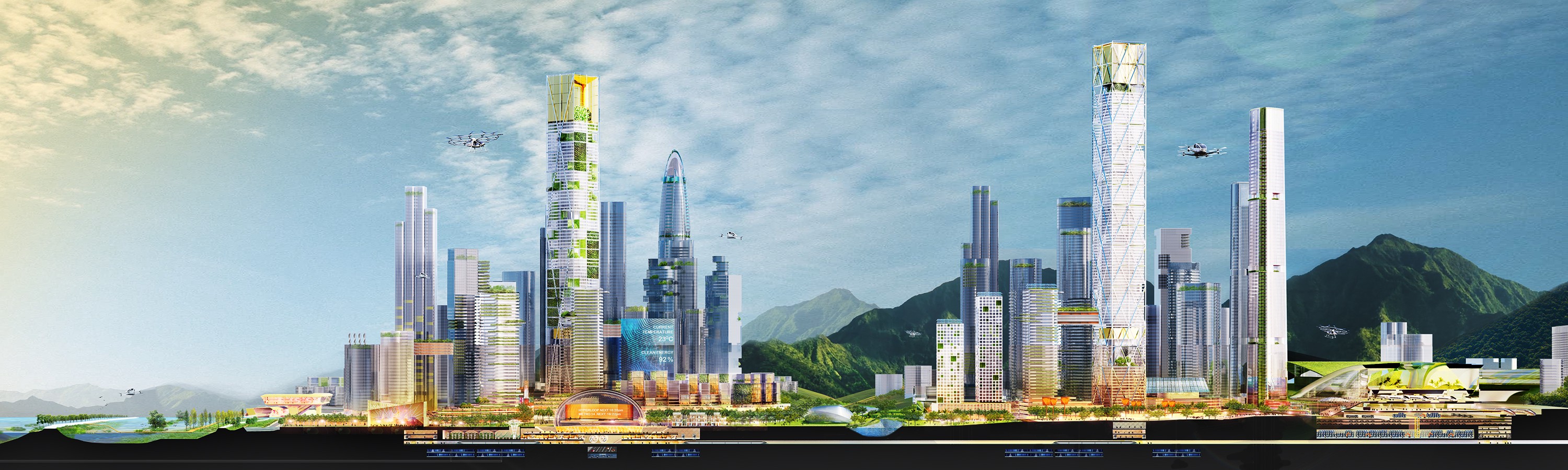
Urban hubs of the future
Image copyright by Skidmore, Owings & Merrill (SOM)


The Future is Now: COVID-19

The pandemic brought the future into the present (climate change, wealth disparity, supply chain disruption, working at home, disease, travel restrictions). Welcome to the new normal.

My Example
San Francisco Flower & Garden Show - Canceled! 
Trip to the Desert - Canceled!
Filoli, Gardens, and Tours - Canceled!
Farmer's Markets - Open (Six Foot Rule)!
Regional Park Trails - Open (Six Foot Rule)!
Bring Back the Natives - Open (via Zoom)!


Looking to the Past

Look to the past for ideas that got us to where we are. Hindsight is 20/20!

My Example
Dyeing Fabric with Plants
The History of Landscape Design in 100 Gardens
At Home: A Short History of Private Life
Connections


What's Happening Now

Live into the present and enjoy every moment, whether gardening or just living.

My Example
Indoor Gardening
Forcing Bulbs: Hyacinth
Easter Lily Care
Amaryllis Care
Calscape
Native Plant Finder
Soil Restoration
Horse Bedding
Wood Chips Everywhere!


Looking to the Future

What ideas and attitudes will take us into the future.

My Example
Vertical Farming
Cities of the Future
Designers for Tomorrow's Outdoor Spaces


The Seasons

Enjoy every season and all that it holds.

My Example
Winter   Spring   Summer   Fall
Enjoying the Birds
Fall at Bishop Ranch


Gardens and Adventures

Explore and experience the gardens and parks that are available.

My Example
Visit to Southern California (pre-COVID)
The Huntington
Chinese Garden at The Huntington
Japanese Garden at The Huntington
Crystal Springs Reservoir (mid-COVID)
Visit to Mendocino (mid-COVID)


Books and Movies

Read books and watch moves to learn and experience gardens of the past, present, and future.

My Example
Houseplants
The Professional Design Guide to Green Roofs
Brother Cadfael tends a medicinal garden in the middle ages during political unrest (and solves mysteries in the process):


Wednesday, May 20, 2020

Cities of the Future

Vision is our big theme this year. We're looking to the past for ideas that got us where we are today; living fully into the present moment; and looking ahead for visionary ideas of the future. For the past several months, COVID-19 has shaken up the whole world – the future is now! We're all eager to get back to our lives, but will it ever be the same? How must we  change and adapt?


Last year National Geographic published a special issue on Cities: Ideas for a Brighter Future (April 2019). I especially liked the conceptual ideas of architectural and urban planning firm, Skidmore, Owings & Merrill (SOM). Their design focuses on principles, rather than a prescriptive approach. One fundamental idea is that cities of the future must stabilize and restore ecological systems. Another is that cities must be human-centered. They call these design principles “biomorphic urbanism”. Densely populated "urban hubs" are planned with the ecology of the site in mind. Water is protected and reused; energy is renewable; waste becomes a resource; high-speed transportation makes it easy to get around; culture and heritage are protected; the infrastructure is carbon neutral; and the economy is automated and online.

Densely populated urban hubs are sustainable and liveable
[Image copyright by Skidmore, Owings & Merrill (SOM)]

Of special interest to me: green zones are plentiful; parks and infrastructure allow water to percolate through the soil to recharge the water table; food is grown locally in urban farms and gardens; green roofs are plentiful; and living spaces include both common areas for socializing and spaces to retreat. I came of age in a world with only 3 billion people, and love my space and open areas! But, according to a United Nations projection, there will be 9.8 billion of us by 2050, with 70% living in cities. The ideas by SOM provide a vision of how we might change and adapt the cities of the future.

Learn More:

Wednesday, March 11, 2020

Chinese Garden at The Huntington


The second garden I visited at The Huntington was the Garden of Flowing Fragrance. Chinese gardens are a combination of elements including buildings, water, rocks, plants, and the arts. Calligraphy and poetry appear throughout the garden, evoking beautiful imagery and stirring the imagination. The garden at The Huntington was developed in collaboration with architects and artisans from Suzhou in Southern China. The garden is patterned after the scholar style, with space for study, contemplation, and the arts.

The arch of fragrant cherry blossoms softens the fierce lion sentries

Round portal in the Wall of the Colorful Clouds leads to the Plantain Court

The Pavilion for Washing Away Thoughts provides a small shelter between the Japanese and Chinese gardens at The Huntington. Here you can cleanse your mind from the rush of daily life, while protected from the elements in a beautiful natural location. The pavilion was recently re-thatched using traditional Chinese methods.

The Pavillion for Washing Away Thoughts

Detailed view of the new thatched roof

The Garden of Flowing Fragrance is one of the largest classical-style Chinese gardens outside of China, combining the southern Chinese garden style with the Huntington's love of plants. The garden was started in 1999 with a generous donor gift, and opened to the public in 2008. See the map for a tour of the garden.

The Plantain Court

Unique window with a view beyond the wall

The garden has undergone an expansion, adding a restaurant, scholar study, library, art gallery, and star gazing tower on the hill. The expansion increases the garden footprint from 3.5 to 12 acres. The grand opening is on track for May 2020.

Pond of Reflected Greenery

The Jade Ribbon Bridge

The Waveless Boat

I was so glad for my whirlwind tour of the Chinese garden, and a chance to experience more examples of the classical style. Next time I hope to linger longer, and explore the new additions.

Pavilion with a rock from Lake Tai in China

We've visited several Chinese gardens over the years including:
To learn more see Garden History – Chinese Gardens, and Elements of the Chinese Garden.

Wednesday, March 4, 2020

Japanese Garden at The Huntington

On our whirlwind tour of The Huntington in January, I selected the Japanese Garden as one of my stops. The nine-acre garden was started in 1911 by Henry E. Huntington and opened to the public in 1928, at a time that Americans were discovering the beauty and culture of the exotic Far East. The garden has been renovated periodically over the years, including recently in 2011.

View of the Japanese garden from the Wisteria arbor

I paused at the Wisteria arbor, to get a big-picture view of the garden, which spans a small canyon and includes a water feature running through it. The arbor was denuded of leaves and flowers, but still full of winter beauty.

The Moon Bridge with the Wisteria arbor beyond

The Japanese garden has been a site for several motion pictures, including Mame (1974), and Memoirs of a Geisha (2005). If you watch the trailer for the latter, you'll catch a glimpse of the garden and the Moon Bridge that arches over the water around marker 1:56-1:57. The bridge and its reflection provide a popular photo opportunity for real life visitors as well.

Japanese house

Structures are an important part of the Japanese garden. Moving partitions enable you to reconfigure the living space – to open up rooms into bigger spaces and to the garden outside, or to close them for privacy.

Ceremonial Tea House

The ceremonial tea house shows the setting for a tea ceremony, where the simple task of brewing a cup of tea is elevated to an art form. Tea utensils are set out, as well as a beautiful kimono. The original tea house was built in Kyoto in the 1960s and shipped to The Huntington, and was recently restored by a descendent of its original creator. 

Path through an allée of green bamboo

Conversation under a cherry tree

The layers of green-on-green plants are lovely and restful, as is the bamboo grove. At the time we visited, the cherry trees and camelias were blooming. In contrast, the raked Zen garden is bare of any foliage or flowers, but provides a serene place for meditation and contemplation.

Japanese lanterns

Lanterns, paths, water features, and koi are important elements in the Japanese garden, and provide focal points throughout the garden.

Water features in the Japanese garden

I enjoyed my short time in the Japanese garden with its streams and ponds, big and little bonsai, bamboo forests, and tranquil settings. I felt the peace and beauty provided by the traditional Japanese garden. Other Japanese gardens we have visited over the years include:


Wednesday, February 19, 2020

The Huntington

The Huntington is located on 207 acres in San Marino, California. It is situated on the former site of the sprawling San Marino Ranch that was owned by businessman Henry E. Huntington from 1903 until his death in 1927. Now The Huntington is the site for the Huntington Library, Art Museum, and Botanical Gardens, and is managed by a non-profit organization.

Statues and fountains at the Huntington Garden

My husband and I had two hours to spend at the Huntington, so we each designed our own whirlwind tour. With limited time, I used the What to See page to plan mine. I honed in on the rare books in the Library Exhibition Hall; a fast view of Mary Cassatt's "Breakfast in Bed" (1897) in the American Art Gallery; and a brisk walk through the Japanese Garden and Chinese Garden. Of course it's good to have a general plan, but then be prepared to be spontaneous if you discover something interesting.

The Huntington Library

I love books, so it was a treat to see the collection in the Library Exhibition Hall. Some of my favorites, relating to this blog, include The Birds of America: From Original Drawings by John James Audubon (1827-38);  A Niewe Herball, or Historie of Plantes by Rembert Dodoens (1578); and a sampling of travel brochures and postcards designed to lure visitors to the West and California in the early twentieth century. (We learned a little about this early marketing strategy in History of Sunset Magazine). 

Life-sized illustrations of American birds by Audubon (1827-38)

Botanical drawings in A Niewe Herball, or Historie of Plantes (1578)

I stopped briefly in the American Art Gallery to see "Breakfast in Bed". It was luminous and seemed to float in midair. I could have spent hours in the gallery to view beautiful paintings, installations, and artifacts. The warm golden lighting really enhances the art displays, and I never felt crowded, even with quite a few people in each room. It was difficult, but I tore myself away and stuck to my schedule – on to the Japanese Garden and Chinese Garden!

Travel brochures promoted the West in the early 20th century

Statue of Diana at the Virginia Scott Steele Gallery

Henry and Arabella Huntington were devoted collectors of books, art, and plants, and had a vision for making their collections available for research, study, and enjoyment. One hundred years later, we are still reaping the benefits of their collections. We definitely need to return!

We parked in the Agave lot

Wednesday, May 15, 2019

Palm Springs in Three Visits

I'm back from my annual trip to Southern California to meet up with my folks and search for spring wildflowers. We usually travel in late March for the best chance of seeing flowers but, due to unusual circumstances, we weren't able to meet until late April. This year was a "super bloom" year because of the spring rains, but I had accepted the fact that the desert and hills would be velvety brown and the blooms long gone. I was fine with that, because the best part for me is the chance to hang out with my parents, explore our favorite haunts, and enjoy their zest for life. Turns out, I got to enjoy both!

Palm Springs exit

Heavy winter and spring rains had closed several key roads, including parts of the Palms-to-Pines Highway, and access to Whitewater Preserve and Bautista Canyon. This meant missing  some of our favorite outings, but we adapted quickly. We visited Palm Springs on three separate occasions (giving us a chance to savor the mid-20th century experience).

Snow topped Mount San Jacinto and wind turbines on the desert floor

We typically stop at the Tramway Gas Station visitor center, originally a gas station that was designed by Albert Frey and Robson Chambers and built in 1965. The roof is a "hyperbolic parabolic of steel I-beams and corrugated metal roofing supported by steel tubular pillars." It's an iconic landmark for your entry into Palm Springs, and located at the base of the road leading to the tram up Mount San Jacinto. They have a great assortment of information about Palm Springs, books on mid-20th century architecture and style, souvenirs, and a kiosk for buying tickets for Aqua Caliente Indian Canyons.

Tramway Gas Station

John W. Hilton's "Enchantment of Sunrise"
(1960, from the Christiansen Collection of 20th Century California Art) 

John Anthony Conner's "Dawn at Palm Springs"
(1935)

We spent a pleasant afternoon exploring the Palm Springs Art Museum and immersing ourselves in the contemporary art exhibits. My favorite is still the small collection of California Impressionist and old west paintings. A few are typically on display, but not nearly enough in my opinion. The paintings capture the light and atmosphere of the desert and the sweeping expanses of land before it became so developed and congested. We lounged in the two sculpture gardens, enjoying the breeze and shade in the 101 degrees afternoon!

Enjoying shade in the Palm Springs Art Museum sculpture garden

Alive!, by Jeffrey Gibson and Aaron Hansen (from Desert X, 2017)

Shady sculpture garden

We also visited the Palm Springs Art Museum Architecture and Design Center (a first time visit for all of us). We saw the special exhibit on Hugh Kaptur (1931 - ) called "Organic Desert Architecture". I had a chance to study the architectural drawing for "Firehouse 4", including the landscape design and plant list. Kaptur is still working in the Palm Springs area.


Palm Springs Architecture Museum

My Example
Hugh Kaptur: Firehouse #4


Landscape design for Firehouse #4

We ate at Maracas Cantina a couple of times (one of our favorite Mexican restaurants). They have delicious food, attentive staff, generous Margaritas, and patio seating with a great vantage point for watching people. Plus they are right across from See's candy, where we purchased an assortment of favorite chocolates for dessert. We got in on the Thursday night Villagefest and joined in strolling the booths, and sitting to watch the crowds and listen to the street performers. We learned later that our daughter-in-law from Seattle was in town for a destination bachelorette party the same day, and did the stroll later in the evening!


Sharing a Margarita at Maracas Cantina

Margarita at Maracas Cantina (three straws!)
Enjoying the street fair across from Maracas Cantina

Another new experience was shopping at the Angel View Thrift Store. A neighbor recommended it for the quality of the items. We had fun combing through the books, videos, and vintage clothes (notable were the Lucite high-heeled shoes, tulle party dresses of the past, and men's button down dress shirts). 

We were surprised at the construction going on - a new condo complex on the outskirts of town, and several new building or renovation projects on the main drag running through town. I was pleased to see they are keeping with the mid-century modern theme that is so iconic for Palm Springs.